COETAIL, Course 5, Kuwait

MYP Design/Art final project…another installment

[See all my final project posts. Always open to input!]

The more I think about the unit we’re creating the more ideas I get and the more excited I get. I’m just nervous to get my hopes up and not have it turn out as awesome as I’m hoping!

I did some brainstorming with Lindsay (MYP art teacher) last week. Note to self: always brainstorm with an art teacher!

MYP Next Chapter: Our school is slowly switching over to the Next Chapter of MYP so we’ve been given the freedom to start incorporating the new guide in our unit planning. Instead of having a unit question, we’ll have a statement of inquiry {The Medium is the Message}. We will also have a key concept, at least 1 related concept and a global context. After perusing the new guide for Art, my thoughts are: key concept=communication, related concept=audience (& expression?), global context=personal and cultural expression. Based on talking to our MYP coordinator, we will probably have to make our statement of inquiry a little more detailed to better incorporate the concepts & context. We will also need a few inquiry questions to “give shape and scope to the unit.” This might be something that we can work on with students throughout the unit (according to the Developing MYP units pre-publication).

We had originally thought we’d use Community and Service as our Area of Interaction. However AOIs are disappearing in the new unit planner. We need to decide how deep we want to get into the new unit planner. Either way, we also need to decide which Approches to Learning (ATLs) we will focus on.

Design Cycle: Although we will be experimenting with incorporating some of the Next Chapter guide into the Art part of the unit, we won’t be using the new guide for Design. However I will still be trying to ‘redefine’ how Design is done at our school. After a couple months of integrating the design cycle into French and Art, I just read the entire (old) MYP Technology guide last week. Wow. So much information. And it seems so many things that need to be tweeked at our school. The main thing I’d like to focus on changing for this unit are the rubrics. We currently use the year 5 exit rubric for all students grades 6 through 10. We also don’t (or rarely) use task-specific rubrics. I could use some help in this area! I don’t really have any idea how to rewrite/tweek the rubrics for year 2 students or how to create task-specific rubrics. Help! 😉

The other area we’re still developing is the problem. I want the students to launch a social media campaign about a relevant problem in Kuwait. I don’t want to leave it too open because they are grade 7 students. But I don’t want to limit them either. My original idea was to allow them to choose between littering (an enormous amount in Kuwait) and tourism (almost none in Kuwait). A littering campaign might focus on the negative aspects of Kuwait and convincing people in the country to make a difference. A tourism campaign might focus on the positive aspects of Kuwait and convincing people outside the country to visit. I still don’t know if these two problems are too different from each other and if we will need to have a more streamlined focus throughout the unit. Thoughts??

Design Folder: The design folder is another thing I’m working on ‘redefining.’ We currently use packets. Our design technology classes complete them digitally (they are in computer labs) however most of the elective classes that we are integrating the design cycle into complete hard copies. The packets are long and boring and students hate them. Here is an example from one of the French classes.

Although this won’t be a group project, I want students to be able to learn from each other giving attribution where necessary. One of my favorite aspects of being a connected educator is all the new ideas I get to ‘steal’ and adapt from other educators around the world. Why not teach our students how to do the same thing?

I’d like students to use Tumblr to create their design folder in order to document the process they go through (and easily share it with classmates). I chose Tumblr because it is simple and the focus is often on photos. My guess is that many students already have Tumblrs. This will be an opportunity to discuss separating school life and personal life online.

In order to help guide students through the design folder, I have created a sample Tumblr blog that I will share with students. I have put relevant information for students and also created [Your Turn] posts to guide students as they document the process. I have organized the posts using hashtags. This is still a work in progress! I’m currently working through Julie’s templates to see how I can make my posts more helpful for the students. I will also have to change a few things as I adapt the rubrics. Creating the design folder in Tumblr has completely transformed our packets. What do you think??

Digital Citizenship: We will have to teach our students to learn from and with each other…not just simply plagiarize. My biggest concern with Tumblr is that it makes it so easy for students to copy & paste and then pass off other students’ work as their own. We will need to incorporate digital citizenship into the unit. The main takeaway I want students to come away with is that they can use and build on other people’s ideas with attribution. We can use Common Sense Media to teach a couple digital citizenship lessons and then hold students accountable with our Acceptable Use Agreement. Many of our students have school iPads so the free iBooks textbooks and workbooks might be an option (if we can get them loaded on their iPads).

I’d also like to familiarize students with Creative Commons licenses. Students will need to choose an appropriate license for their design folders and display the license on their Tumblr blogs.

Photography: This unit started as a photography unit and is morphing into something much bigger. If all goes as planned, I think we will be able to ‘redefine’ the unit through the use of technology. I’m envisioning the students using their photography to make a change in the world through a social media campaign. I think that “the medium is the message” does a great job of encompassing what we’re hoping to accomplish. I wish that the Kuwait Grand Photography Contest was just a month or two later…then we’d have even greater potential for the students to feel invested.

Expert Advice: This is where we’re struggling the most right now. I’d love to find a social media activist/expert who can Skype/Hangout with the class to talk about using (social) media to impact people’s decisions/actions. We can show this video and introduce them Witness.org but I think it’d be much more meaningful to actually have a real person. Someone who uses pictures/videos and social media to affect how people act and the way they think would be perfect. Ideas??

Small Details: Lindsay is on board for a pre-assessment (à la Julie) where students spend a class period taking pictures around the school. This will give Lindsay an idea of their technical skills and get the students thinking about the message of their pictures. I’d also like to incorporate a lesson on ‘powerful images.’

I’d love any input from anyone! We’re still very much in the planning stages so I’m hoping to crowd-course this a little in order to refine my ideas and make sure that they will actually work! Thank you 🙂

Uncategorized

Indo-Aqua-Graphic


I stumbled across a very cool infographic today that I thought was worth sharing.  I found this on a blog called Hydro-Logic and the graphic deals with water usage in India.  It focuses on agriculture specifically.  I feel that it really contains a lot of information in a compact, attractive package.  It comes from a project through the Columbia Water Center which is definitely legit, but Pepsico is also a partner. I’m not sure how that works exactly.  Perhaps Pepsi is more philanthropic than I thought.

From the Columbia Water Center.

This is very interesting to me, as a person who currently lives in India.  Although I know that there is a lot more to the story of water than is shown in this infographic, but I appreciate the simplicity of their design.  It gave me enough information to make me really start thinking.

COETAIL, Course 5

MYP Design/Art final project…a work in progress

My final project is still in the planning stages but all the input has really gotten me brainstorming! Thank you to everyone 🙂

As I think about this project, it seems multi-faceted to me. Not only am I trying to redefine an art unit with the MYP design cycle, I’m trying to redefine how design technology is taught at our school. In addition, I’m also trying to use technology to redefine both the art and design units. Thinking about it makes me excited…so if we can make this all work out, it’d be awesome!

A few things that are running through my head right now:

  • I’m interested in the pre-assessment several people have mentioned. I’d like to talk to the art teacher about using Julie‘s video project as a model (which Julie was awesome enough to give me more details on!). I’d like to start the entire unit with a create class where students go around the school and take some pictures. The art teacher could then assess their photos before she starts her photography instruction so that she can differentiate as needed. We have not switched to the Next Chapter MYP Design criteria yet so this would also be a good chance to experiment with the “technical skills” piece (subset of criterion C).
  • I’m still interested in having the students connect with a photography and/or PR expert. Need to do some active searching! Anyone know anyone?
  • Do we have to give students only 1 problem or could they choose? Although I would love to have a real outside client who needs our photography, I’m not exactly sure where to find one. The two things that come to my head when I think of Kuwait and photography campaigns are (our lack of) tourism and pollution/littering. Could we create two problems and allow students to choose?
  • I’d like to give students the freedom to explore with different apps and assess them. This could be part of their investigate stage and could also be shared with their classmates so that they learn from each other.
  • Our school doesn’t have a standard blogging platform. Some middle school students are using WordPress, others KidBlog. I’d like to use Tumblr because of it’s ease of sharing multimedia. I haven’t decided yet how I want to use Tumblr. Would it be used only to showcase their work? Or would it be used as their design folder? Our design technology classes currently use teacher prepared packets…I’d really like to get away from that. But is Tumblr the most appropriate place to document the process?

Still lots of thinking and planning to do…but it feels like I’m getting somewhere! As always, any and all input is much appreciated! 🙂

1:1, iOS, Kuwait

Shared Vision – Input Appreciated!

Our school is currently using the ISTE Essential Conditions to evaluate our 1:1 iPad program and move it forward. We are currently working towards coming up with a shared vision. I’m excited about where the future lies!

I would love any input on our two draft visions! Feel free to comment here or add a comment to the google doc. Please share about your experiences or any advice! Thank you! 🙂

Kuwait

Shared Vision – Input Appreciated!

Our school is currently using the ISTE Essential Conditions to evaluate our 1:1 iPad program and move it forward. We are currently working towards coming up with a shared vision. I’m excited about where the future lies!

I would love any input on our two draft visions! Feel free to comment here or add a comment to the google doc. Please share about your experiences or any advice! Thank you! 🙂

Google, Kuwait, Professional Development

Kuwait International Educators Conference 2014

A couple weekends ago, Jeff and I presented at the third bi-annual Kuwait International Educators Conference at Al Bayan Bilingual School (BBS). We were invited to present in the fall after we met Lynda Abdul Raheem (FAWSEC Professional Development Coordinator) at PEAK in 2012.

KIEC was the first time we were sought out to present and the first time we’d ever done 4-hour workshops. We met with Lynda in the fall and learned all about their organization and the conference. Their philosophy is that any professional development that betters their staff will also better education as a whole in Kuwait. Love it. All BBS employees were required to attend both Saturday and Sunday (with Friday optional). They opened the conference to all educators in Kuwait and even allowed people to split tickets (3 people, 3 days, a different person attends each day). Each day there was a keynote, 4-hour workshop and 1-hour session (except Friday). At 60KD (~$212) it was a pretty great deal for a conference!

Jeff and I each led one 4-hour workshop each day. We each had two different workshops. I was scheduled to do Empowering on Friday and Sunday and GAFE – Next Level on Saturday. After Jeff lead GAFE for Beginners on Friday and Saturday, we realized the demand was high and people were excited. We switched it up and I replaced the Sunday Empowering with GAFE – Next Level. Saturday and Sunday (when all BBS teachers attended) were full sessions…and we even had to turn people away! The energy in our rooms was impressive! I had SO much fun nerding out with people over Google Apps 🙂

Empowering Teachers & Students with Technology

  • My Empowering workshop was good…but I had very high expectations after attending Scott McLeod‘s workshop at NESA. I ended with only 5 people…which made it difficult to really engage in discussion and get them creating. One piece of feedback was that the first part of the session was theoretical…but I’m not quite sure how to have attendees analyze lesson plans without the background in the frameworks (SAMR, etc). Also, almost the entire group was not educated in North America. I wonder if this makes any difference in the way teachers teach. Would definitely be interested to know how teacher education programs differ! Although it didn’t live up to my expectations, the feedback made it seem like people still got something out of it.

GAFE – Next Level

  • I left this session both days feeling energized and excited! I had a pretty big range of knowledge in the room which was difficult to keep up with at times. I started with a Google Race (adapted from my classroom in SC). The race ended up taking a little longer than expected. If I did this session again, I would like it to take less time…but I’m not sure what I would take out! I had a range of feedback from “I got a little lost at times and would have preferred a slower pace” to “I felt like it could have moved a little faster.” Seriously…it couldn’t have been more opposite! But every single piece of feedback was positive. It was incredibly rewarding and reminded me why I love what I do. I need to remember that feeling when I’m not feeling quite so positive about my job, school, etc.

Presenting at KIEC was an incredible learning experience. It was a lot of work but we also had a lot of fun. Working with Jeff so that our GAFE sessions spiraled was a great opportunity. If you have any questions about either of my sessions, let me know! If you want any of the information from Jeff’s session, contact him. 🙂

Uncategorized

Slide Show Syndrome

I remember when people actually used to use slide projectors.  When I was a kid family friends would relive their recent vacations with a real slide show in their living room with the lights turned low.  It sounds nice, but invariably the slide shows would drag on longer than they should have.  It used to be a common joke, tolerating someone’s slide show.  “Hey, do you want to come over on Friday?  I’ll show you some slides from my trip to Europe.”  *GROAN*  Right?

So what made people think that turning slide shows into digital presentations filled with lengthy paragraphs of dull text and rife with stock images stolen from the internet would make quality teaching tools?  As teachers, we need to be aware of what makes for a good “show” in the classroom.  Garr Reynolds, although I think he aims more at businessmen than teachers, makes a lot of really good points on his blog about making streamlined and effective PowerPoint presentations.  He touches on one of my biggest PowerPoint/Google Presentation pet peeves: having a presenter read his entire slideshow with little to no added information.  Why are you up there, man?  How much are you getting paid to stand there when you should have just emailed your PPT file.  Garr encourages presenters to make striking slides that provide visual anchors to the content that  is being discussed during the LIVE presentation.  All the rest else can be included in a handout.  Matt Helmke reiterates this in his presentation stating that the “Handouts can set you free.”

I’ve been working with a colleague to help middle school students create monthly middle school presentations.  The topics are varied, but essentially the show ends up being a summary of what is happening in the middle school, a kind of middle school current events.  I went through a recent slide show and discovered that it could have used some serious work. ***The presentation has a lot of names and faces from the middle school.  I’m not entirely comfortable sharing that out at large.  If you’d like to take a look, send me a message and I’ll provide you with a link***

The first thing that surprised me was that many of the photographs of student events were filled with the backs of people’s heads?  Surely we can find better photographs than this. 

I’m not in danger of giving anyone’s identity away here because there are ONLY backs of heads. Where are the faces?  Is this an image that the kids are going to remember?  Why did we include this?

There are other sequences in the slideshow that are fully standalone.  They require no live presentation.  This isn’t really appropriate when gathering the entire middle school together. Is it?  We should provide our students the opportunity to get in front of a group and practice public speaking.  I’ll be reducing the text and getting the kids out in front more next time around.

My main takeaway from this reflection is that I now have the opportunity to teach students how to make quality presentations. If I can connect with them at a young age, I’ll be doing my part to attempt to put an end the endless stream of ineffective, mind-numbing slide show presentations.

1 Two 1, Collaboration, Google, Professional Development

Speed Dating – Technology Style

About a month ago Tami Lenker, Blythewood HS Technology & Learning Coach (and former colleague), asked me to be part of their Speed Dating. Um…really?! Then she explained it was Technology Style. OHHHH!

Tami had her entire staff split into 4 large groups. These groups were then divided further into 6 small groups. They rotated to 6 different presenters who wowed them in 4 minutes. That’s a total of 20 different presentations going on at the same time! Genius! [Richland 2 blog recap]

I participated via a Google Hangout. It worked incredibly well and was a lot of fun!

my screenAfterwards I recorded my session and gave them some additional info I couldn’t get into 4 minutes. Enjoy!

Uncategorized

2013 in review

These year in reviews are always fun to look at 🙂 [2012]

The WordPress.com stats helper monkeys prepared a 2013 annual report for this blog.

Here’s an excerpt:

The concert hall at the Sydney Opera House holds 2,700 people. This blog was viewed about 8,500 times in 2013. If it were a concert at Sydney Opera House, it would take about 3 sold-out performances for that many people to see it.

Click here to see the complete report.

Google, Professional Development

I’m officially a Google Apps Certified Trainer!

EEEK!! I’m not going to lie – I’m super pumped about this! After more than a year of working on this application, it’s officially official 🙂

During the fall of 2012, I completed the coursework, paid for and passed the 6 qualification exams (you have 90 days to complete the tests). On December 4th I was awarded Google Apps Qualified Individual status.

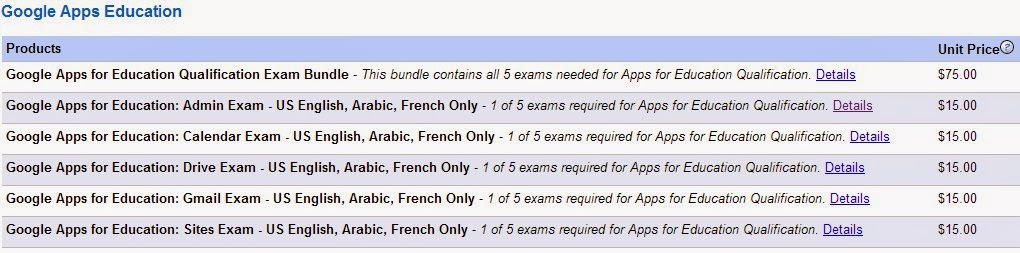
Since then, they have (supposedly) updated the tests to reflect the recent Google Apps updates. There are now only 5 tests that can be taken for $75 in English, Arabic or French.

After becoming a Qualified Individual, I had one year to complete the Certified Trainer application. I started working on the application in October/November. Since it is a Google Form (and therefore not savable), I kept all the answers to the questions in a Google Doc so that I could simply copy and paste when the time came. I made sure to share all my documents so that anyone with the link could view them.

The hardest parts for me were the two videos. Luckily I had used the COETAIL course 3 final project as a rough draft for my about me video. The most difficult thing was getting my videos cut down to the under 2-minute requirement…it goes by fast!

I recently discovered FormMule and have found it incredibly useful for disseminating information during my PD workshops.

There were a few hiccups in submitting my application. I started trying to submit by application on December 4th (the 1 year anniversary of my Qualified Individual status). However I kept getting an internal server 500 error. I was freaking out a little! Luckily I found the Google Apps for Education Certified Trainer forum. Becky notified me when the applications were back up (December 10) and assured me that I would not be penalized for submitting ‘late.’ Applications are currently not being accepted again for the first 8 weeks of 2014.

I can’t wait to explore the GACT community and see my name listed on the ‘Find a Trainer‘ site! Although I’m not super into badges, I have no problem displaying my new badge over there in my right sidebar 😉 And I’m proud to be officially considered ‘Googley’ (“Definition of “Googley” (according to Google) – Googley people are creative, passionate about their work, and ethical. They communicate openly; can thrive in a fast-paced, rapidly changing environment; and are willing to “roll up their sleeves” and get things done. They can be serious without wearing a suit and tie. Googley people can be worldwide experts and still encourage curiosity and questions without being condescending.”)!