COETAIL, Course 3

Visual Interpretation in MYP Language B

Another year as a Technology Coach, another year teaching French. I am once again in the MYP Language B classroom (grades 9 & 10; phases 1, 2 & 3) part time due to unforeseen circumstances. I am entering my 3rd week in the classroom and I’m expecting to be teaching a minimum of this week and next. While it has been an incredibly challenging few weeks, I’ve learned a lot about MYP assessment.

The four criterion that can be graded in Language B are oral communication, visual interpretation, reading comprehension and writing. The middle school French teacher and I have started planning our formative assessments for the next unit based on our summatives.

Phase 3 Unit 2: On fait la fête!
Unit Question: ‘How can I be organized?’
AOI: human ingenuity.
Assessment tasks: A- tell a friend about your birthday party, B- analyze & compare birthday party invitations, C- read a text about Mardi Gras & answer questions, D- write a letter to describe your birthday party

Our focus will be on organizing parties. Although the summatives will be about birthday parties, we want to include a variety of cultural events throughout the unit. My favorite ‘C’ from the US National Standards for Foreign Language is Culture!

Language B French Formative: It is July 14. You are standing on the streets of Paris. This is the image you see as you look up into the sky. In French, write a short paragraph describing the holiday you are celebrating. Then, write a dialogue between you and two friends that you might have while participating in the festivities.
Les neuf Alphajet de la Patrouille de France.

COETAIL, Course 3

My blog design

Creating my blog
As a perfectionist, I wanted to make sure that my COETAIL blog looked decent before I unveiled it to the world (and wrote my first post). I first chose a color palette that was appealing to me using Adobe’s Kuler. After picking my WordPress theme, I passed my palette on to my husband who created my header in Photoshop. I love that my header has a little bit of my personality in it! I then changed my professional blog so that the two looked nearly identical.

Another look
After reading this week’s articles, I took a closer look at my blog. Although it is appealing to me, I didn’t love the organization of my right side-bar widgets. I took Brandon Jones’ advice and did some moving around. I’ve tried to clean up the side-bar and make it a little less overwhelming. You can compare the screenshots below to what it is now. (On the left was the top section, on the right was the bottom section. Unfortunately I lost the middle section that contained a tag & category cloud).

Coetail side bar 1                                             Coetail side bar 3

My ideal blog layout…
Speaking of side-bars…there are some other things I’d like over there. Instead of a text link to my other blog, I’d really like to have icons for my other blogs, twitter, diigo and linkedin. I really like the look of icon links instead of text (thanks to Beth for sharing the article!). After reading the article from Slate, I would also like more control over the font of the page.

Guest Blogging
Before reading the week one material, I had written a rather lengthy guest blog post (I compiled a few posts I had written on my other blog). Although I wasn’t able to make it too much shorter, I did decide to break up the sections (similar to what I’m doing with this post).

What do YOU think?
I believe it is most important what my readers think. I want my blog to show my personality while still appealing to the readers. I would love if you completed the ‘Exercise to Test Visual Hierarchy‘ in the comments!

  1. List the key information points that you are seeking.
  2. Assign values (1-10) according to their importance.
  3. Now, look at the actual design again.
  4. Assign values (1-10) according to the actual visual importance as you see it in the live design.
  5. Consider: Does the expected importance match up with the actual designed importance?

Thank you! 🙂

COETAIL, Kuwait, Professional Development, UKSTL

Kuwait: Year 2!

I cannot believe it’s already September! We had a great summer: spent quality time with lots of friends & family, traveled for a month in the US, and mostly disconnected. Now we’re back in Kuwait for year 2 (year 5 teaching) and school is already under way!

It was incredibly refreshing to disconnect from my PLN this summer. I didn’t blog, keep up with Twitter or read my RSS feeds. During the last 2.5 weeks back “home,” I’ve been trying to get used to the heat while getting ready to dive in full force this semester. Today starts COETAIL Course 3 and EDL 661 with UKSTL. I’ll be taking 12 graduate credits this semester and have already started to feel a bit overwhelmed. However, I’m incredibly ready to be challenged, fulfilled and rewarded. Looking at the outlines for all 4 courses has made me eager and excited. I can’t wait to start learning and growing professionally!

I plan to continue to reflect professionally and share resources on this blog. However with a total of 21 graduate credits while working full-time this year, I may not be posting regularly (not that I did before either!). I would, however, like to continue to grow my PLN and collaborate with educators around the world.

I’ve tried incredibly hard to come back to school this year with a positive, go-with-the-flow attitude. I’ve decided to make myself stand out in my position (as technology coach) by intentionally showing teachers that I care about how they’re doing and supporting them. The first week with new & returning staff was an amazing week of professional discussion and collaboration organized by the middle & high school principals. It set a great tone for the start of the school year. The entire 6-12 staff participated in several protocols (including Compass Points – I’m a north with tendencies towards east & west). I particularly liked the text-based protocols and the articles chosen. Our HS principal also shared a video with me that is worth slowint down and watching for 20 minutes: Celebrate What’s Right with the World. If only more human beings had this attitude…what a world it could be!

Happy September, happy school year and happy new beginnings!

COETAIL, Course 2

Course 2 Final Project: 20 Questions

Another one bites the dust! We’re 2/5 of the way done with COETAIL. I’ll finish up my 4th year teaching (1st year international) and head back to the States for the summer in 22 days. Then it’ll start all over again in just over 3 months (plus I’ll be adding on courses for my M.Ed. in School Tech Leadership)!

Christina, Janette and Karen did a revamp of our school’s AUP last year for their course 2 final project. An edited version has been adapted at AIS so I chose to create a UbD lesson plan. Kelsey and I connected on Twitter and then invited Jeff to join us. It was an interesting experience to be working with 1 person in a different country and another person with whom I share an office. Although Google Docs worked well, it was sometimes a challenge to avoid miscommunications and ensure that the three of us were on the same page. I imagine these challenges would be present if we were in the same place but collaborating solely through a GDoc with limited real-time chatting may have exacerbated them.

I think our lesson has definite promise. It would probably be ideal for grades 7-9 and would take several class periods to complete. I do not currently have a classroom but would love to hear from anyone that uses/adapts our lesson plan with their students!

Many thanks to Jeff and Kelsey for being great partners 🙂

COETAIL, Course 2

Social Media Usage: An Analysis

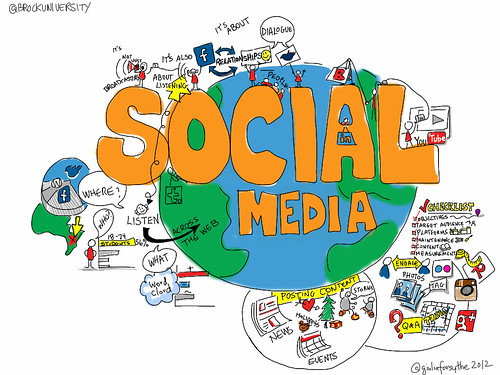
@brockuniversity Social Media

Many connected educators talk and blog about the stages of Twitter and PLN adoption (even I mentioned it). But have you ever taken a second to analyze how and why you use social media both personally and professionally?

Twitter
If I look at my Twitter account (professional), I tweet out a lot of articles. I’ve tried really hard to start including a short thought so that the tweet isn’t so sterile. I then add the title of the article, the link, a relevant #hashtag (or two) and the SOURCE. If the person is on Twitter, I find & use their handle. If the person isn’t on Twitter (rare), I include their name. Here is a sampling of what I’ve shared lately:

Twitter pt. 2
I also use Twitter when I’m at conferences to share what I’m learning from the workshops and keynotes I attend. In this case, I include the quote, the SOURCE and a #hashtag (or two). Here are a few from #NESA_SEC in April:

If the person doesn’t have Twitter, I still use their name:

Facebook
My Facebook use is 99% personal. However even there I tend to focus on sharing. Of my last 10 posts: 4 were stories/statements (I tagged someone else in every one), 2 were photos (I tagged friends in both), 3 were links/videos relevant to my friends, and 1 was a request for input for my little brother’s college project on Dubai.

Key Word(s)?
If I look at my overall usage of social media (I could also include Instagram, Linked In, Google+my professional blog, Pinterest and our travel blog), I tend to focus on sharing and connecting. I don’t share things just to share – I share them to connect to other people. Hyperlinks and social media have made this possible. This is not how I began using Facebook (2004) and Twitter (2010) however. My progression to zen with social media has been years in the making. And I still struggle with whether I should keep my accounts private (Facebook, Instagram) or public (the rest).

What does your social media usage look like? How do you decide when you should (or shouldn’t) post something and where you’re going to post it (I wish I could remember where I found that link!)? The demographics of social media use are incredibly intersting. What type of social media user are you??

[Thank you to Chelsea for helping me re-find those last two links! Social media IS all about connections ;)]

COETAIL, Course 2

Thoughts on Digital Safety – Nothing Revolutionary

Thank you to everyone who helped me last week by answering my questions about Technology Coaches. My PLN is awesome!

Student safety and cyber-bullying has been the focus of a lot of press lately. As educators, we need to be aware that just because students know how to use devices (tablet, computer, etc), they don’t know how to behave when they’re using them. Behaving appropriately online is not an innate ability that students are born with. Instead it is something that must be taught. Who and how is the golden question!

This responsibility of teaching kids digital etiquette needs to be shared by both school and home. Parents can start from a young age at home. Common Sense Media has lots of great resources and parent agreements to support parents. Although I’m not a parent, I think it is parents’ job to help students understand how to appropriately use technology instead of banning it. If your kids are inappropriately using the technology that you gave them, help them learn what they should do differently instead of simply taking it away. Am I a crazy no-kid lady?

Unfortunately, not all adults understand how to behave online. This is where schools should come in to support and educate parents. Once students start school, teachers should be incorporating digital citizenship into their lessons on a daily basis. In 2013 most people own multiple devices, these type of lessons do not need to be an “extra.”

Parents and teachers also need to be living what they preach – if you don’t want your child to text during dinner, parents shouldn’t either; if you don’t want your students to text during class, teachers shouldn’t either. We need to be constantly modeling digital etiquette for our students.

Parents and schools should be working together to help students harness technology for good. Bullying and students being disrespectful to each other is nothing new. Unfortunately, however, technology can exacerbate the situation. Many students around the world are doing amazing things with technology (even if the media focuses on the negative). Scott McLeod‘s keynote, Powerful Technologies Powerful Youth, at the NESA Spring Educators Conference in Bangkok last month highlighted some of these students.

It is important that both children and adults are aware of the power of technology (good and bad). Explicitly and implicitly teaching students how to behave online is the job of the community, not the individual.

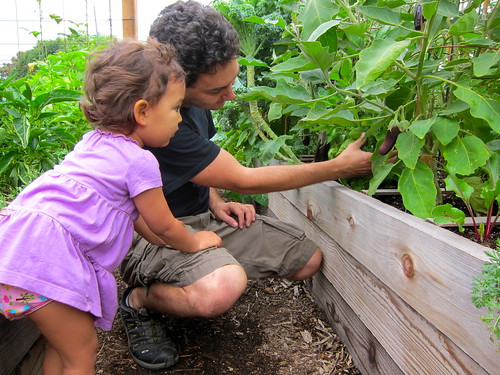
Community Garden Work Day

This post doesn’t seem revolutionary or original to me. But I’m glad I had the opportunity to find some good resources and get my thoughts down on “paper.” 😉

COETAIL, Collaboration, Kuwait, Professional Development, Social Media

#NESA_SEC 2013

To be honest, I attended the NESA Spring Educators Conference this year because my husband was chosen to present. Instead of wondering around Bangkok by myself for 3 days, I decided to pay (a lot) to attend the conference in the hopes of mediocre professional development. What I got was much more than that!

Networking: I had the opportunity to meet Dana Watts and Scott McLeod in person (and attend their sessions). I’ve been following them on Twitter for awhile and have a bit of a blog-crush on Scott’s Dangerously Irrelevant. I also found many new international educators to follow – my list is still primarily US-education based and I’m ready to expand my PLN! The discussions that took place on Twitter were equally as valuable as the sessions I attended.

Sessions: I really enjoyed the idea of the 4-hour workshops. Scott McLeod’s workshop blew my mind (as did the keynote). I was inspired & challenged by the content Scott delivered and by the collaboration that I participated in and witnessed. Check out the unit/lesson plan my group made (we had approx 25 minutes to create it). We then presented the lesson to another group who gave us feedback (and vice versa). I was completely overwhelmed at first (and didn’t like the constraints  but then it got me thinking -if we could do this in 25 minutes, what could teachers who actually teach this content do in an hour (or more!)? And I ended up really liking the fact that Scott had given us constraints – it focused us and was much closer to reality (we all have standards…). If I had gone to nothing else, these two sessions would have made the entire conference worth it.

Decisions: Scott & Jayson handed out fliers for the School Technology Leadership programs at the University of Kentucky during the workshop. My first instinct was to set it aside without really looking at it. The longer I sat in Scott’s workshop the more I felt that piece of paper calling to me. I listened to Scott and Jayson talk about the program and did a little of my own research. Wow. Even though I’ve already started my Masters with COETAIL, I felt pulled to the UKSTL Masters. Scott, Jayson and Dana were nice enough to answer a few questions for me…and my mind was made. I’ve been (quickly) assembling my application ever since (due May 1). I’m really excited about the possibility of being a part of the next UKSTL Masters cohort (I’ll still complete the COETAIL certificate, but won’t do the Masters). The more I sit on my decision to apply the stronger the pull becomes to be a part of ‘it.’

So…the Spring Educators Conference was a success. I am bummed that I missed out on the opportunity to meet Doug Johnson and attend his sessions. Next year the conference doesn’t back up to Spring Break…but if there’s a good line-up of presenters I might just pony-up the cash and go again. 🙂

COETAIL, Course 2

Breaking the law is easy

While at the NESA Spring Educators Conference in Bangkok 2 weeks ago I heard about the University of Kentucky School Technology Leadership Masters. The more I talked to Scott McLeod, Dana Watts and Jayson Richardson about the program, the more I knew it was something I needed to do. Since then I’ve been reading my Google Reader through leadership-tinted glasses. After writing my post a couple days ago about digital footprints in education, I had another thought today. My post focused on how administrators judge potential hires based on their online activity…but what about vice versa? There are several connected administrators that I would love to work for (Eric Sheninger, George Couros, Chris Lehmann, & Steven Anderson to name a few). When I’m job-searching & interviewing in several years I will be looking at THEIR digital footprints…the superintendents, the principals, the school, etc. Connected teachers need to turn the tables and actively pursue jobs that we want with admin we want to work for!

On to some copyright laws…
Easy on the I's (eyes)
Forgetting about copyright is just too easy. It’s no wonder that laws are broken on a daily basis – other people’s work is constantly at the tip of our fingertips. It’s senseless and relatively guilt-free (read: anonymous). It takes a lot of effort to find Creative Commons images instead of just Google searching and using the first one you like. So how do we teach this idea to kids? I think it’s a difficult concept to teach in the US, let alone in the rest of the world.

As far as I know there are few (copyright) laws in Kuwait. We have DVD guys that sell ‘pirated’ copies of TV shows & movies, stores that will jailbreak your iPad…and so much more (…was I supposed to say that?!). As we roll out our 1:1 program with iPads, I consistently witness students breaking copyright “laws.” Usually it has to do with music and/or images. It’s just too dang easy to save pictures and rip audio/video. Kids don’t even think twice about using other people’s work and most definitely don’t consider it plagiarism. So I guess that’s my solution – get them thinking. Ask them how they would feel if someone else stole their work (and didn’t give them credit). Help them understand Copyright and Creative Commons and the difference between the two. [I really like Doug Johnson‘s idea to change the focus to what is permitted, not forbidden.] Encourage students to share their work using Creative Commons licenses. Know the answers to their questions. Encourage students to create their own material (music, photos, images, etc). If students absolutely must use other people’s music & images, make sure that they have the right tools to find content and cite it. Integrate digital citizenship into your curriculum. Be role models (this might just be the hardest one).

COETAIL, Course 2

Personal and Professional Collide Online

Surfers almost collide at Morro Rock, Morro Bay, CA

I have to disagree with hiring and firing based on profile photographs. Shouldn’t your personal life be left at the door? A person working five days a week deserves a little down time on the weekends. What a person does on his or her own time on days off should not be used to judge work ethic because that person may be serious and hard-working when they enter the workplace. Employers know that Facebook is popular and that our generation is utilizing it, but business and personal lives should not coincide. ~Samantha MacConnell, Don’t overestimate privacy of online information

Samantha has a great idea. And in an ideal world personal and professional lives wouldn’t intersect. However that’s not the world we live in. Everything we do online affects our lives. ESPECIALLY as educators.

I attempt to keep my personal and professional lives separate by using privacy controls and choosing how I use social media. My Facebook is personal – I have high privacy settings, stay up to date on any privacy changes and don’t talk (much) about my professional life. My Twitter is professional – I have it completely open to leave a positive digital footprint and rarely talk about my personal life.

I currently have 3 blogs – two professional and one personal. All three blogs are completely open and searchable on the web. Living in Kuwait, we are very careful about what we put on our travel blog. Anything questionable either goes on Facebook (high privacy!) or doesn’t get posted.

All that said…if a student or employer manages to find me on Facebook, I’m not worried. I don’t live my life in a way that would get me fired. And if I did, I would understand that there could be consequences for making my actions “public.” Although I value privacy and attempt to have a certain amount of it, I know there really isn’t any such thing on the internet.

[I love Google products…but I didn’t even attempt to go there re: privacy.]


COETAIL, Course 2

The Digital-Education Disconnect

Rural Disconnect

As an advisory teacher for a group of seniors last year, we spent one 20 minute lesson talking about their “digital footprint” (I’m not even sure we used that phrase). I barely remember the lesson so I’m sure my students remember it even less (I wish I would have known about this lesson!). Adults love to TALK about how what kids do online now will impact their future, but do we walk the walk? How many adults in education are actively concerned about their digital footprint? How many of us know that what we do online can hurt (AND help) our chances of getting jobs? Yes – I believe that as (international) educators we should have a digital footprint that helps demonstrate what we can bring to an organization.

A theme often talked about among connected educators on Twitter & #edchat is how to get more educators involved in the conversation. In a US system where many teachers stay in the same position/district for their entire careers, will they ever see the benefit of a positive digital footprint? Teachers who never change jobs would rarely think about if their employers are looking for a positive footprint. International teachers are in a different boat. From my (limited) experience, it seems that we change jobs much more often – some people as often as every 2 years. Our digital footprints may be closer to the forefront of our minds however I think it’s still quite common to focus on the negative effects of social media and not how it can actually help us grow in our practice. That said, how many people know the ins and outs of their privacy settings on Facebook, Twitter, etc?

And then there’s the administration. How many administrators that are actively hiring are looking at applicants’ digital footprints (positive or negative)? What do admin actually KNOW about the people they hire (besides what’s on their beefed up resumes and what their references say)? A simple google search provides a plethora of professional evidence. I wonder if any of my administrators during the last 4 years have bothered to see what I’ve put online.

A couple months ago I watched the beginning of a keynote by George Couros during Calgary Educational Partnership Foundation‘s Online Safety Week. He talked to the students about how everything they do online (even during grade school) will affect their job prospects later. Ironically students had already been tweeting (using the hashtag) about how they didn’t want to be there and other not so nice things. Little did they know George was online watching them!

Kids don’t understand the gravity of their actions online (specifically social media) nor how to harness their power for good. But who’s teaching them? There aren’t many adults out there with the skills to do so. This mix will lead to a very interesting future for all of us!